Education pathway research in the U.S.
Get a researched education roadmap before you spend years or thousands
I review your background, credits, degree options, licensing rules, and costs so you can choose the most practical next step.
Use what you have
You don’t need to start over
You already have a degree or experience — from the US or abroad — but it’s unclear how it translates here.
We’ll figure out how to use what you already have and what (if anything) is actually worth adding.
Start or change direction
Without wasting years on the wrong path
Whether you're starting from zero or switching careers, the goal is the same: avoid unnecessary degrees and find the fastest path that actually works.
We’ll map out what makes sense for you — and what to skip.
Not sure which one fits you?
Start or switch without wasting years
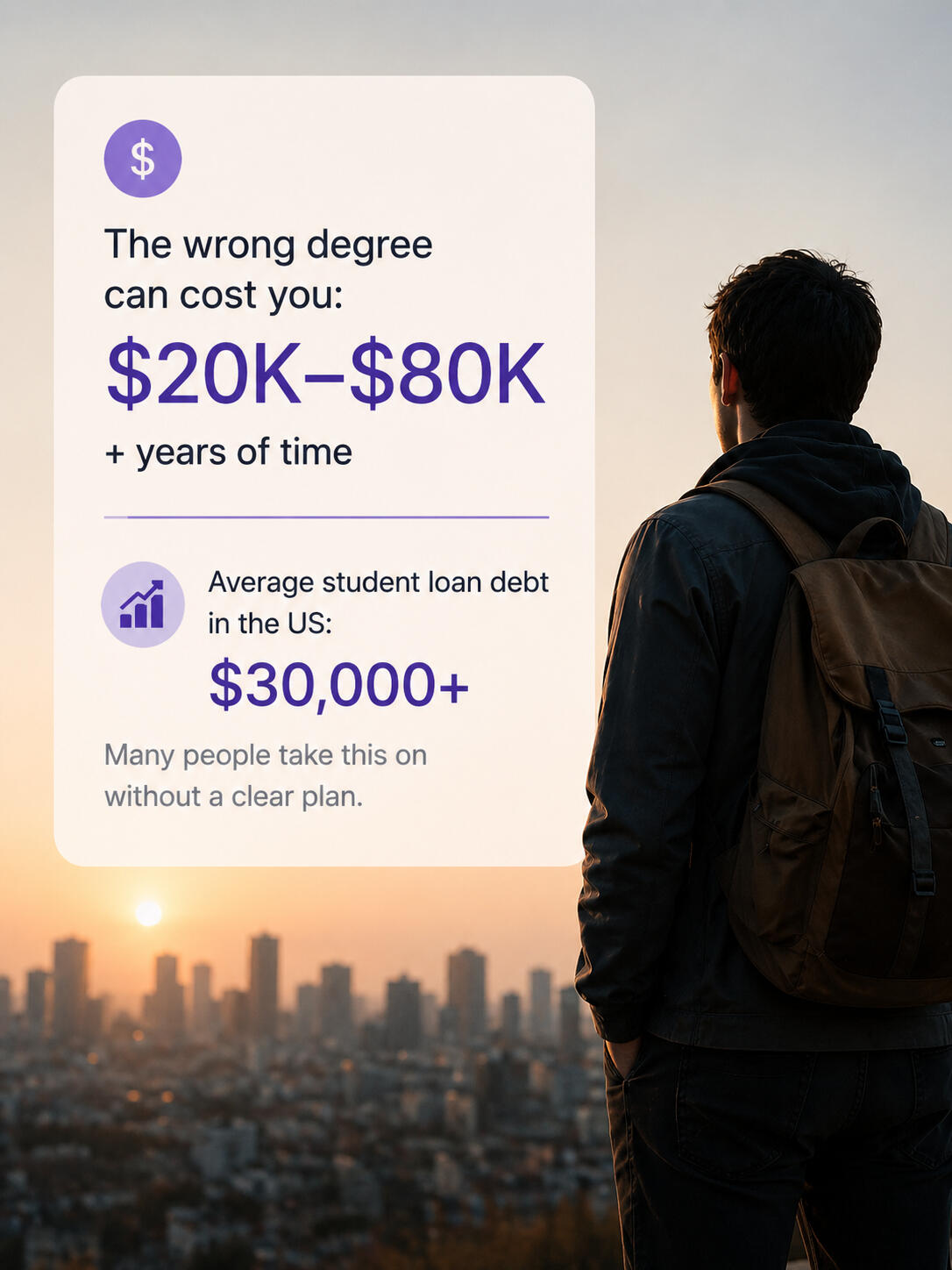
The wrong path can cost you years.
If you're starting from zero or changing direction, the biggest risk isn’t effort — it’s choosing the wrong path.
Many people spend years on degrees they don’t actually need.
We’ll map out the fastest, most realistic path forward — and what to skip.
Use your existing education in the US
You already have a degree or experience — from the US or abroad — but it’s unclear how it translates here.
Most people assume they need to go back to school from scratch. In reality, there are often faster and more practical options.
We’ll figure out how to use what you already have — and what (if anything) is actually worth adding.

Not sure if this applies to you?
Send a short description of your situation — I’ll let you know if it makes sense to talk.
FREE WORKSHOPS FOR COMMUNITY ORGANIZATIONS
Help your community navigate college without wasting time or money.
Practical workshops for adults navigating the U.S. education system, career changes, and going back to school.
A Practical Workshop — Not a College Sales Pitch
College in the U.S. can be confusing and expensive, especially for adults returning to school or navigating the system for the first time.These free workshops help participants understand their options before they spend thousands of dollars or take on unnecessary debt.
Participants can learn about:
✓ Comparing colleges and programs based on actual cost and outcomes
✓ Reducing the time and cost of earning a degree
✓ Transfer credits, CLEP, and alternative credit options
✓ Scholarships, financial aid, and employer tuition benefits
✓ When a degree makes sense — and when it doesn't
✓ Using previous education and experience toward a new path